


Archive for the ‘Kidsdata News’ Category
Kidsdata: Going Beyond 2013 County Health Rankings To Find Health Data On California Kids
Today, the Robert Wood Johnson Foundation is releasing its 2013 County Health Rankings, which examine the health of adults and children in the nation’s 3,141 counties on such measures as insurance coverage, obesity, exercise, community safety and smoking.
This year’s rankings show that rates of premature deaths have dropped to their lowest level in two decades. Nevertheless, residents of the nation’s unhealthiest counties have premature death rates that are twice the rates of those in the healthiest counties. Violent crime has dropped 50 percent in the past 20 years, but one in five children live in poverty, imperiling their health.
Here’s how the RWJ Foundation describes the goals for its rankings:
We know that much of what influences our health happens outside of the doctor’s office—in our schools, workplaces and neighborhoods. County Health Rankings & Roadmaps help communities create solutions that make it easier for people to be healthy in their own communities, focusing on specific factors that we know affect health, such as education and income. Having health insurance and quality health care are important to our health, but we need leadership and action beyond health care.
Here at kidsdata.org, we applaud the RWJ Foundation and its research partner, the University of Wisconsin Population Health Institute, for drawing national attention to the complex economic, environmental, behavioral and social factors that influence Americans’ health.
Kidsdata.org has additional information on California children’s and adolescents’ health – not included in the County Health Rankings – that nonprofit organizations, children’s advocates and policymakers can use in their work, including:
* Statewide data on children with special health care needs: demographics, conditions, quality of care and more.
* Children’s emotional and behavioral health data, including tobacco and alcohol use, suicide rates, school connectedness, and other measures available for counties and local school districts.
* Child safety and welfare statistics, including bullying, child abuse and neglect, and foster care at the local level.
We invite you to explore our data and welcome your questions and comments!
We’re also offering a free, in-person training session on how to use kidsdata.org in San Francisco on April 9, 2013. For more information, click here.
Please contact Barbara Feder Ostrov, communications officer, at [email protected] or 650-721-6044 or share in the comments section below.
Image credit: Calsidyrose via Flickr
Posted by Barbara Feder Ostrov
Post Comment
Grantees Mine Data to Improve Child Health
 Translating data into social change is never easy. Yet with the help of $10,000 “mini-grants,” 13 nonprofit organizations and local governments in California used health data to develop creative projects that drew public attention to critical health and social welfare issues facing children and youth.
In Shasta County, a public education campaign encouraged reversal of waning immunization rates among children. A Fresno report highlighted the importance of collecting data for Asian subgroups to demystify the “model minority.” Santa Barbara County residents received newspaper inserts describing the state of children’s health in their county, emphasizing the impact of poverty on kids. Fact sheets went out statewide documenting the health status of Latino youth in rural counties. Nonprofits, residents, and local government in the City of Stockton used data to develop a community action plan to address the most pressing youth health issues.
These creative projects and others were funded in 2011 by grants from the Lucile Packard Foundation for Children’s Health, which issued a request for proposals that would use data to promote positive change in children’s health in California. Grant applicants were asked to use kidsdata.org, the Foundation’s flagship website that tracks indicators of child health and well being, along with data from other sources. More than 40 organizations submitted proposals.
“We were impressed by the range of innovative ideas proposed for using data to improve child health,” said JoAnna Caywood, senior director of programs and partnerships at the Foundation. “We hope that these examples will inspire organizations to use the local data available on kidsdata.org to target specific concerns in their communities.”
Here are some project highlights:
The California Pan-Ethnic Health Network expanded the Multicultural Health Web Portal to include more data on children and youth of color. The organization also produced nine county fact sheets highlighting factors that influence the health of children of color.
The Central California Children’s Institute at California State University-Fresno produced the report, “Demystifying the model minority: The importance of disaggregating subgroup data to promote success for Southeast Asian youth.” The report spotlights the need for Asian ethnic subgroup information and shares data collection approaches that can be replicated in other regions.
The Public Health Institute’s California Adolescent Health Collaborative produced three issue briefs on the health status of rural Latino youth in California. The briefs describe trends and inequities in rural Latino youth health outcomes and factors that can promote their health. The series has been disseminated statewide and featured in a national public health newsletter.
The San Joaquin Community Data Co-op led a series of community convenings to increase understanding of the issues affecting children’s health in Stockton and to create a guide for action. The guide outlines the needs facing children, existing services to meet those needs, and areas in which additional services are needed.
See a complete list of the grant results to date and links to each organization.
Photo credit: Enrico Strocchi via Flickr
Posted by kidsdata.org
Tags: child health
Aiming for Change: Achieving Triple Aim Goals in Pediatricians’ Practices
Pediatricians, with their politically popular patient base, might feel insulated from the cost-cutting and accountability initiatives that are washing over health care providers like a tidal wave.
They shouldn’t, Dr. Edward Schor argues in a recent article in the journal Pediatrics.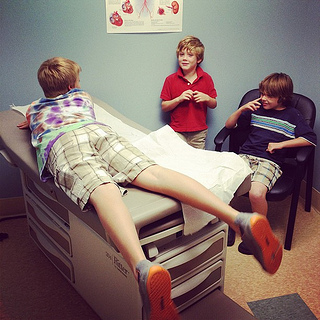
Pediatricians, like other specialists, are facing new pressures to account for the quality and cost of care they provide to their small charges. That’s especially true for physicians treating chronically ill children, whose increasingly complex care is contributing to rising medical costs.
Dr. Schor, a pediatrician and senior vice president for programs and partnerships at the Lucile Packard Foundation for Children’s Health, highlights six ways health providers can help transform the care they provide to children and their families. The goal, he writes, is to achieve the Institute for Healthcare Improvement’s “Triple Aim” framework: reduce health care costs, improve patients’ experiences of care, and improve the health of populations.
1. Family Centered Medical Homes: Child health providers are being asked to create “medical homes” that better coordinate their patients’ care, but incentives for them to do so remain lacking.
2. Practice Redesign: Advanced access appointment systems and telehealth initiatives are among pediatric practice transformations that are improving patient satisfaction.
3. Care Plans and Care Planning: Physicians can work with patients to create individualized “accountable care plans” that address acute, preventive and chronic care, and spells out who is responsible for each part of the care plan.
4. Supporting Self-Management: Pediatricians can better involve patients and caregivers by emphasizing problem-solving approaches and self-monitoring.
5. Organized Health Care Systems: Because participation in large, integrated health networks can improve quality and control costs, increasingly, insurers and other payers are offering incentives for pediatricians to join these networks.
6. Sharing Resources: Large health networks aren’t the only option for pediatricians who want to benefit from partnerships while retaining their autonomy. Community-based systems of care coordination, after-hours call centers and other initiatives involve pooling resources from local health providers for mutual benefit.
See the Pediatrics Perspectives article here (paywall). For a full-text copy of this publication, contact Barbara Feder Ostrov at [email protected].
Posted by kidsdata.org
Tags: Edward Schor, pediatrician, practice management, Triple Aim
Celebrating Children’s Strength: International Childhood Cancer Day
Today is International Childhood Cancer Day, hosted by the International Confederation of Childhood Cancer Parent Organizations (ICCPO) which is represented by the American Childhood Cancer Organization in the United States. ICCPO describes the day as one in which “the strength, courage and resiliency of children with cancer and their families are celebrated.”
Advances in the treatment of childhood cancers during the past 50 years have led to remarkable improvements in survival rates. Despite these advances, more children from birth to age 14 die of cancer than any other disease. Only accidents account for a larger number of childhood deaths. It’s estimated that more than 1,100 children under age 15 are diagnosed with cancer each year in California. Approximately one of every 340 children in California will develop some form of cancer before they reach 20 years old.
From 2005-2009, 9,101 children ages 0-19 in California were diagnosed with cancer, a rate of 17.4 diagnoses per 100,000 children/youth, according to kidsdata.org. The rate of cancer diagnoses increased from 16.4 in 2000-2004 to 17.4 in 2005-2009. Youth ages 15-19 generally have higher rates of cancer diagnoses than children ages 0-14. In California, white children also tend to have the highest rate of cancer diagnoses among all ethnic groups with available data, although Latino children have the greatest number of diagnoses.
Find out more about childhood cancer in California and the U.S. by checking out these resources:
- California Cancer Facts and Figures, 2012, California Cancer Registry & American Cancer Society
- Outcomes for Children and Adolescents with Cancer: Challenges for the 21st Century, 05/20/2010, Journal of Clinical Oncology, Smith et al.
- National Cancer Institute: Childhood Cancers, U.S. National Institutes of Health
Posted by Roselyn Thomas
Tags: International Childhood Cancer Day, pediatric cancers
Children and Environmental Health: New Insights from Environmental Protection Agency and Kidsdata.org
A new update to a landmark Environmental Protection Agency study on children and the environment finds both good and bad news for America’s kids. And we’re seeing a similarly complex picture in California, according to kidsdata’s recently updated environmental health data.
First the good news from the EPA report, America’s Children and the Environment: the levels of toxins such as lead and cotinine (a marker of second-hand smoke exposure) in kids’ bodies have declined significantly since the 1970s. Kids increasingly are breathing less-polluted air in many communities as well.
Still – and this remains a mystery to scientists – despite nationwide improvements in air quality, asthma rates have risen slightly in U.S. children, particularly children of color.
Here are some highlights of kidsdata’s new environmental health data, which focus on conditions for California’s children:
Air Quality
- In 2010, the annual average level of “fine particulate matter,” or soot, in the air exceeded the concentration considered potentially harmful in only two California counties (out of 30 with available data): Kern and Riverside.
- That same year, San Bernardino County had the most recorded days (103) with ozone levels above the regulatory standard, among counties with available data, followed by Riverside (93), Tehama (78), Kern (69), and Los Angeles (69). The state as a whole averaged 15 days in which ozone concentrations exceeded regulations in 2010.
- Measures of air quality on kidsdata.org also indicate improvements in some areas. For example, the recorded number of days with high ozone levels in Fresno County decreased by 99 days in the past decade. In 2001, the county had 145 documented days in which ozone levels were above regulatory standards. In 2010, that number decreased to 46 days.
Lead Exposure
- In 2010, almost one-third (30%) of California children and youth identified with elevated blood levels resided in Los Angeles County. The vast majority of children screened for lead poisoning are under age 6 because Medicaid and state regulations require that every child covered by a government-funded health program be preventively screened for lead poisoning twice, once at 12 months old and again at age 2 (or at the next opportunity up until age 6).
Water Contamination
- California had 1,730 violations indicating that contaminant levels in drinking water exceeded public health limits in 2009. Nearly two-thirds of these violations occurred in seven counties: Fresno (254 violations), Tulare (208), Kern (198), Madera (132), San Joaquin (110), Monterey (101), and Sonoma (100).
For more information and a deeper data dive, click here.
Posted by Barbara Feder Ostrov
Tags: environmental health, pollution
Recent Children’s Health News Roundup: Mental Health, Infant Mortality, School Health Centers, and More
Following are some recent news highlights about children and families, along with related data from kidsdata.org:
Alcohol & Tobacco Use (see related data)
Living in Caring Community May Help Curb Teen Alcohol Use, Research Finds
(PsychCentral, 1/13/13, by Wood)
CDC: Binge Drinking Important Health Issue for Girls and Young Women
(CNN, 1/8/13, by Curley)
Rate of Youth Smokers Decreases as Use of Smokeless Tobacco Increases, Report Finds
(California Healthline, 12/14/12)
Children’s Mental Health (see related data)
GAO Report: Improvements Needed in Mental Health Care for Children
(Huffington Post, 1/10/13, by Resmovits)
About Half of Suicidal Teens Have Access to Therapy Prior to Ideation and Attempt, Research Finds
(NY Times, 1/8/13, by Carey)
Children Special Health Care Needs (see related data)
California Ranks Low Nationally in Providing Health Care and Social Services to Children with Special Health Care Needs
(LA Times, 1/17/13, by Gorman)
Study: Children with Chronic Conditions Regularly Treated with Alternative Therapies
(Huffington Post, 1/14/13, by Pearson)
Report: U.S. Child Cancer Death Rates Drop
(WebMD, 1/7/13, by Mann)
Children with Complex Chronic Diseases Taking Up Increasing Amount of Pediatric Hospital Resources
(HealthDay, 1/2/13, by Mozes)
Report: Federal Funding to California for Special Education Falling Short
(SF Chronicle, 1/3/13, by Tucker)
Study: Some Children Diagnosed with Autism as Young Children Lose Symptoms as They Age
(Disability Scoop, 1/15/13, by Heasley)
Demographics (see related data)
Shrinking California Child Population Signals Major Changes for State
(Wall Street Journal, 1/8/13, by Jordan)
Dental Health (see related data)
Report Finds State Facing Dental Crisis for Medi-Cal Children
(California Healthline, 1/18/13)
Affordable Care Act Offers Expanded Dental Coverage for Some Children
(Kaiser Health News, 1/14/13, by Andrews)
Also See: http://www.npr.org/blogs/health/2013/01/15/169419717/law-expands-kids-dental-coverage-but-few-dentists-will-treat-them
California Gets “C” in Report on Basic Preventive Dental Procedure for Kids
(California Healthline, 1/8/13, by Gorn)
Exercise and Physical Fitness (see related data)
Reducing Kids’ Screen Time Alone May Not Promote Exercise, Study Suggests
(SJ Mercury, 1/10/13, by Pittman)
Study: 3 Out of 5 Elementary Schoolers Do Not Meet Physical Activity Goals
(MedPage Today, 1/7/13, by Neale)
Academic, Social, and Physical Benefits of Recess Make it ‘Crucial’ for School Kids, Pediatricians Say
(LA Times, 12/31/12, by Brown)
Infant and Maternal Mortality (see related data)
Disparities in Infant Mortality Require Deep, Complex Solutions
(HealthyCal.org, 1/14/13, by Gilligan)
Report: Racial Disparities in Maternal Mortality Persist; Overall Rate Increases
(Healthycal.org, 1/9/13, by Fulton)
San Francisco Works to Combat Black Infant Mortality Rate, Which Is Six Times That of White Infants
(SF Chronicle, 12/29/12, by Gonzales)
School Health Centers (see related data)
More than $14 Million in Funding to Go to California School Health Centers Under ACA
(California Healthline, 1/7/13)
American Academy of Pediatrics Urges Having Doctors for Every School District, Nurse in Every School
(Reuters Health, 12/31/12, by Seaman)
School Health Centers Partner with Existing Community Organizations to Increase Access to Health Services
(Reporting on Health, 1/15/13, by Plevin)
Weight (see related data)
Study: Parents Who Harshly Criticize Their Overweight Teens Do More Harm than Good
(NY Times, 1/9/13, by Brown)
Obesity Rates Decline Among Young, Low-Income Children, According to Study
(Reuters, 12/25/12, by Pittman)
Posted by kidsdata.org
Post Comment
Health Care System for Chronically Ill Children in California Lags Behind Many States, New Study Shows
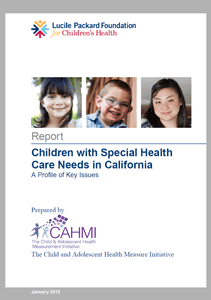 California is trailing many other states when it comes to providing health and social services for children with special health care needs.
Our new study, Children with Special Health Care Needs in California: A Profile of Key Issues, analyzes the most recent data from a survey of parents by the U.S. Maternal and Child Health Bureau. California ranks in the bottom six of states on key health measures such as access to pediatric specialists and coordination of care. Data from the study are available at http://www.kidsdata.org/cshcn/.
Among the key findings:
- An estimated one in 10 – approximately one million – California children under age 18 has a special health care need, ranging from mild to life-threatening.
- More than four in five children with special health care needs in California do not receive care that meets federal minimum quality standards.
- Among the estimated 270,000 children with special health care needs in California with Medi-Cal or other public insurance coverage, only 6 percent receive health care that meets the federal quality standards. California ranks last in the nation on this measure, tied with Nevada.
- California ranks 50th in the nation on the percentage of children with special health care needs who have problems getting needed referrals for specialty care.
- Families of children with special health care needs in California are more likely than families in all other states to cut back or stop working due to their child’s condition.
- California ranks last in the nation on the percentage of children with special health care needs whose families experience shared decision making with health care providers.
- Although most California children with special health care needs are insured, just 59% of those who are insured have consistent and adequate health insurance coverage to meet their health needs.
Children are considered to have special health care needs if they have a chronic health problem and use more health care services than typical children. These children may have asthma or diabetes, conditions that can be controlled with medication and lifestyle changes, or be dependent on sophisticated medical equipment to get through each day. They account for more than 40 percent of all health care costs among children nationwide, despite making up only about 16 percent of the U.S. child population.
Low-income families and families of children with the most complex needs usually have the most difficulty in finding medical and dental care, child care, transportation, educational assistance, medical equipment, consistent health insurance, and a range of other services.
We can and must do better by our children. Here are some possible solutions:
- Strengthen and expand care coordination efforts
- Facilitate access to community-based therapeutic and family support services.
- Improve availability, comprehensiveness, and affordability of insurance
- Improve access to specialist care
- Emphasize family-centered care
To that end, we have established the California Advocacy Network for Children with Special Health Care Needs, which brings together individuals and organizations to press for policy changes to improve the system. More than 450 individuals are Network members, representing families, young adults, care providers, insurers, advocates, researchers, and more. To find out more about the Network or join, click here.
Posted by kidsdata.org
Post Comment
California’s Shrinking Child Population Signals Major Changes for State
 California’s population of children is shrinking, and that means some big changes ahead for the Golden State.
In 1970, children made up 33 percent of California’s population, but by 2030 they’re expected to comprise just 20 percent, according to a new demographic analysis commissioned by the Lucile Packard Foundation for Children’s Health and conducted by University of Southern California researchers.
The growing imbalance between children and retirees means that the economic role of a child born in 2015 will be nearly twice as important as that of a child born in 1985, the report suggests.
“These trends are not yet widely recognized, but they should be a wake-up call for policymakers. Policymakers are making decisions about public resources and budget allocations based on what they think the child population used to be, and not what it really is,” said report author Dowell Myers, professor of policy and demography and director of the Population Dynamics Research Group at USC. “We will be increasingly dependent economically and socially on a smaller number of children. They are more important to the state’s future success than ever before.”
Why exactly is California’s child population shrinking? Far-reaching demographic changes, including declining birth rates, fewer newcomers to the state and a smaller population of women of childbearing age all play a role, Myers said.
The state’s birth rate has declined in every major racial and ethnic group since 2000 and has fallen below what demographers call the necessary “replacement level” of 2.1 births per woman. The loss of California’s children coincides with the expected retirements of the state’s over-65 population whom these children will replace as workers, taxpayers, voters and consumers.
“Our hope is that this report will encourage policymakers to recognize the population trends identified in this report and address the issues they raise,” said David Alexander, M.D., CEO of the Lucile Packard Foundation for Children’s Health. “As children become an increasingly rare and precious resource, the case becomes even more compelling to provide them with best health care and education possible.”
You can read the report and get more information here.
Posted by David Alexander, MD
Post Comment
Sparking the Connection: School Connectedness in California
 Finding their way in school can be difficult for many children. The Centers for Disease Control (CDC) identifies one factor, school connectedness, that can be a protective factor to help students to avoid negative outcomes. The CDC defines school connectedness as “the belief by students that adults and peers in the school care about their learning as well as about them as individuals.” Research shows that students with higher levels of school connectedness are more likely to succeed in school and have lower rates of emotional and behavioral problems.
Here’s some of what we know about school connectedness among California’s children.
• 87-90% of 7th, 9th, and 11th graders, and 82% of students in non-traditional schools, report medium or high levels of school connectedness, according to 2008-10 data.
• While school connectedness varies by county/school district and by racial/ethnic group, from 2004-06 to 2008-10, the statewide percentage of students with high levels of school connectedness rose for all racial/ethnic groups, as well as for all grade levels and for both boys and girls.
• In 2008-10, only 12-17% of California students surveyed reported a high level of agreement that they have opportunities for meaningful participation at school, such as doing interesting activities, helping to make decisions, and doing things that make a difference at school.
On kidsdata.org, school connectedness is measured by student reports of being treated fairly, feeling close to people, feeling happy, feeling part of, and safe at, school. Find more information about these and other key findings from the California Healthy Kids Survey in our recently released data advisory.
Increasing school connectedness involves programs and policies that involve all stakeholders in schools: families, faculty and staff, community members, and, perhaps most importantly, students themselves. The CDC describes several strategies to improve school connectedness. Here are three of their strategies that focus on students and their families.
1. Engage students and families in the decision-making processes in schools.
2. Promote families’ involvement in their children’s academic and school life. Schools may need to provide specific opportunities for engagement as well as educate family members about how they can participate.
3. Develop positive learning environments in classrooms. Train and support teachers in utilizing classroom management and teaching methods that create this environment.
What do schools do in your local community to promote school connectedness?
Posted by Roselyn Thomas
Post Comment
Students Speak Up: Bullying is Widespread in California Schools
Recently updated data on student reports of bullying and harassment in California schools suggest that bullying is an issue of widespread concern in the Golden State. The data come from the California Healthy Kids Survey (CHKS), a survey of students developed and administered by WestEd for the California Department of Education (CDE). Forty-two percent of 7th graders in California reported being bullied or harassed at school in the past year. Percentages were lower among 9th and 11th graders; 35% of 9th graders and 28% of 11th graders reported being bullied. Student reports of bullying and harassment are available at the school district and county level, providing a local lens on an issue of statewide concern and focus. Data also are available at the state level.
To tackle this issue, the U.S. Department of Justice recently coordinated a Bay Area “Stop Bullying” Summit in San Francisco with local officials. Using data from kidsdata.org, this summit sought to bring more attention to the prevalence of bullying and harassment in California. Moreover the conference highlighted bullying prevention efforts being utilized around the Bay Area. Bullying and harassment are important issues and many Californians including schools, parents, youth, and governmental officials are stepping up to promote bullying prevention and student safety in schools.
Have you checked out the amount of student-reported bullying in your area? What are people and schools in your community doing to prevent bullying?
Posted by Roselyn Thomas
Post Comment