


What We Know—and What’s Missing—About Adverse Childhood Experiences
In recognition of Child Abuse Prevention Month, KidsData has released new estimates of adverse childhood experiences (ACEs). Maltreatment and other ACEs—such as growing up around violence, substance abuse, or mental health problems—can be traumatic, disrupt healthy development, and increase the risk of serious health problems in adulthood. The good news: ACEs are largely preventable, and data showing who’s most likely to be impacted can help focus prevention efforts.
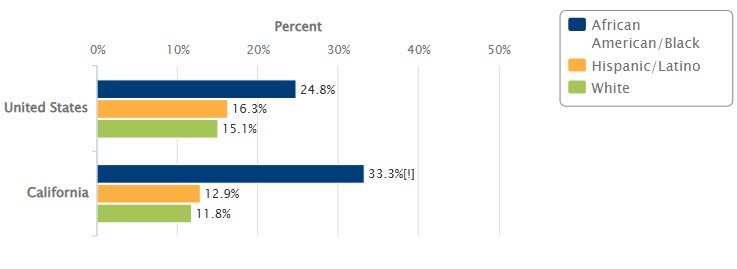
The need for targeted interventions is acute. According to estimates from the National Survey of Children’s Health (NSCH), African American/Black and Hispanic/Latino children generally face higher rates of exposure to two or more ACEs than their white peers, statewide and nationally.
Percentage of Children Ages 0 to 17 With Two or More Adverse Childhood Experiences (ACEs), by Race/Ethnicity: 2024
Among the ACEs asked about in the NSCH—but not reported in the most recent data for 2024—is being judged or treated unfairly because of sexual orientation or gender identity. Sexual and gender minority youth experience greater adversity in childhood than their straight, cisgender peers, and disparities may be even larger than research suggests, as many ACEs data sources don’t capture homophobia, transphobia, or other traumatic stressors many LGBTQ+ young people face.
Percentage of Children Ages 6 to 17 Who Have Been Treated or Judged Unfairly Because of Their Sexual Orientation or Gender Identity: 2022–2024

Despite being asked about in the 2024 NSCH, data on discrimination due to sexual orientation or gender identity are not available publicly, due to government actions to restrict access to these data. Estimates for 2022 and 2023 show discrimination of this type impacting hundreds of thousands (between 1% and 2%) of youth in California and across the U.S., even before sweeping rollbacks of LGBTQ+ protections beginning in 2025.
When data are collected but never released, an opportunity to make better decisions is lost. For evidence-based policy and program options to prevent, interrupt, and mitigate the effects of ACEs, and to ensure all young people have access to trauma-informed services tailored to their specific experiences and needs, see KidsData’s overview of policy options.
For more on federal health data and policy related to sexual orientation and gender identity, see the Federal Data Forum, State Health Access Data Assistance Center, Williams Institute, and KFF.
Opportunities
First 5 California: Stronger Starts Statewide Day of Action
On Wednesday, May 6, First 5 California will launch a new phase of its Stronger Starts campaign, focused on addressing ACEs and toxic stress in children and ensuring families have the support they need to thrive. Join the press conference and community event at 10 a.m. PT in Sacramento, or visit the Stronger Starts website to learn more about the campaign.
Association of Public Data Users (APDU) unConference
APDU’s attendee-organized “unconference” will bring together data users to share knowledge and discuss issues of concern, provide networking opportunities, and brainstorm about the future of public data. The virtual event happens July 7, with early-bird registration through May 31.
Children’s Health Resources
EpiCenter: California Injury Data Online Updates
The California Department of Public Health has updated its EpiCenter interactive tool with 2024 data on injury-related deaths, hospitalizations, and emergency department visits. Data can be queried for children and young adults specifically, by age group, sex, county, cause of injury, and other parameters.
Maternal Mental Health Screening in California: Progress and Opportunities
The UCSF Center for Health Equity presents new findings on depression and anxiety screenings during and after pregnancy in California, based on the 2020–2024 Maternal and Infant Health Assessment. The brief also outlines strategies to increase universal screening, including reducing systems barriers for both mothers and providers, and improving the transparency and quality of monitoring data.
Posted by kidsdata.org
This entry was posted on Thursday, April 30th, 2026 at 10:26 am. You can follow any responses to this entry through the RSS 2.0 feed. You can leave a response, or trackback from your own site.