


Archive for March, 2020
Supporting Children Through Health Challenges
Usual Source of Health Care Among California Children: 2015-2016
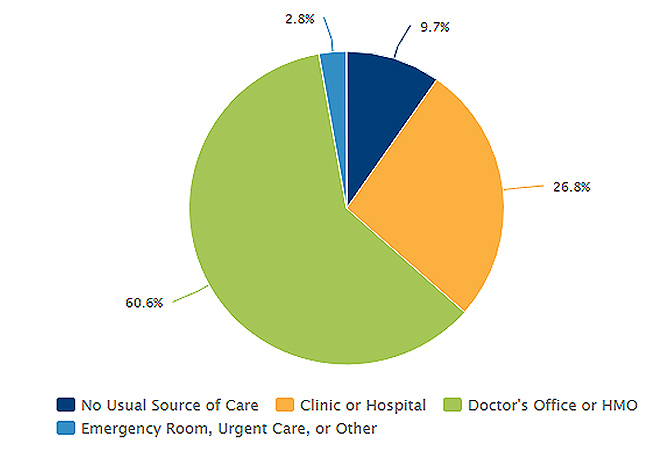
A coordinated approach to health care that is affordable, evidence-based, and family-centered safeguards youth most effectively. Children receive care from a complex system of clinics, hospitals, schools, and more. Important measures of this broad system of care include how often these health care services are accessed, why they are used, and to what extent they are adequate.
Over nine in ten California youth ages 0-17 experienced no delay in medical care in 2015-2016. During that time period, their usual source of care was visiting a doctor’s office or HMO (61%), going to a clinic or hospital (27%), and using an emergency room or urgent care center (3%). Ten percent of children had no usual source of care. In California, the main reason children ages 0-17 were discharged from hospitals in 2017 was for mental diseases and disorders (14% of discharges). However, about four in ten youth who needed help for emotional or mental health problems received counseling in 2015-2016.
Schools can be a safe and accessible environment to address health issues among children. One in four elementary school teachers and one in five high school teachers strongly agreed that their school provided adequate health services in 2015-2017. Among school support personnel, there were 2,410 nurses, 1,041 psychologists, and 626 counselors for every student in California schools in 2019. School-based health centers provide medical care, dental care, mental or behavioral health care, and other services through on- and off-campus sites and mobile vans. In 2019, 268 school-based health centers served California children in 33 counties.
Support for Health Challenges Data
These data are a part of Safeguards for Youth, a compilation of the latest data on protective factors and supportive services that promote California children’s health and well-being. Learn more at kidsdata.org/Safeguards.
Hospitalization
- Hospital Discharges
- Hospitalizations for Mental Health Issues
- Asthma Hospitalizations
- Injury Hospitalizations
- Intentional Injury Hospitalizations
- Unintentional Injury Hospitalizations
- Self-Inflicted Injury Hospitalizations
- Firearm Injury Hospitalizations
- Visited the Emergency Room in Last Year
Physical and Mental Health Care
- Usual Source of Health Care
- Delayed or No Medical Care
- Receipt of Mental Health Services Among Children Who Need Treatment or Counseling
- Youth Who Reported Needing Help for Emotional or Mental Health Problems by Receipt of Counseling (California & L.A. County Only)
School Services
- School Health Centers
- Number of Pupil Support Service Personnel
- Ratio of Students to Pupil Support Service Personnel
- School Provides Adequate Health Services
- School Provides Adequate Counseling and Support Services for Students
- School Emphasizes Helping Students with Emotional and Behavioral Problems
- School Provides Services for Substance Abuse or Other Problems
- School Collaborates with Community Organizations to Address Youth Problems
Related Resource
Common Sense shares resources for families during the coronavirus pandemic including helping children understand COVID-19 news coverage, helping parents support children through school closures and online learning, and recommending what to watch, read, and play.
Recently Released Data
We recently released data about pupil support personnel, disconnected youth, and juvenile arrests. See links to the latest here.
Posted by kidsdata.org
Post Comment
Protecting Youth Requires Meaningful Relationships
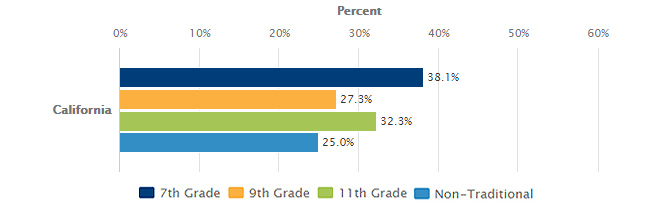
Caring Relationships with Adults at School: 2015-2017
Meaningful relationships are fundamental to safeguarding youth. Every child needs an adult who is both caring and supportive as well as attentive to basic needs. When an adult demonstrates a deep commitment to a child’s emotional and physical well-being, that child is more likely to feel secure and protected which supports their long-term health and well-being. These relationships are most critical at home but are also important in all youth environments such as in school.
Many students in California lack a caring relationship at school. Less than half of students in 7th and 11th grade and about a quarter of students in 9th grade and in non-traditional programs highly agreed that they had a caring relationship with an adult at school in 2015-2017. Hispanic/Latino students in these grade levels may be least likely to have caring relationship with an adult (29% highly agreed) compared with white students (39% highly agreed), among race/ethnicity groups with data.
Nurturing School Community Data
These data are a part of Safeguards for Youth, a compilation of the latest data on protective factors and supportive services that promote California children’s health and well-being. Learn more at kidsdata.org/Safeguards.
Feeling Connected
Strong Relationships
- Caring Relationships with Adults at School
- Adults at School Care About Students
- Adults at School Believe in Student Success
Supportive Environment
- School Supports
- High Expectations from Adults at School
- Meaningful Participation at School
- Academic Motivation
- Students Who Are Motivated to Learn
- School Motivates Students to Learn
- School Is a Supportive and Inviting Place to Learn
- School Gives Students Opportunities to Make a Difference
- School Fosters Youth Resilience or Asset Promotion
- Students Respect Each Other’s Differences
- Cultural or Racial/Ethnic Tension at School
- School Welcomes and Facilitates Parent Involvement
Related Resources
Simple Interactions promotes a research and practice-based approach in child and adult relationship-building and provides free resources to support those who serve children, youth, and families. It is a partnership between the Fred Rogers Center, the Harvard Graduate School of Education, and the University of Pittsburgh.
Strategies 2.0 is a multi-dimensional initiative to help organizations strengthen families and communities by offering free resources and training. It is supported by the Office of Child Abuse Prevention.
The Second Annual Child Abuse Prevention Month Kids’ Art Contest has begun! This year’s theme for the art contest is “My Hero.” Entries are due March 22, 2020.
Posted by kidsdata.org
Post Comment