


Archive for November, 2019
Reconnect to Disconnect from Cyberbullying
California Students Who Were Cyberbullied Four or More Times in the Previous Year by Levels of School Connectedness: 2015-2017
Grades 7, 9, 11 and Non-Traditional Programs
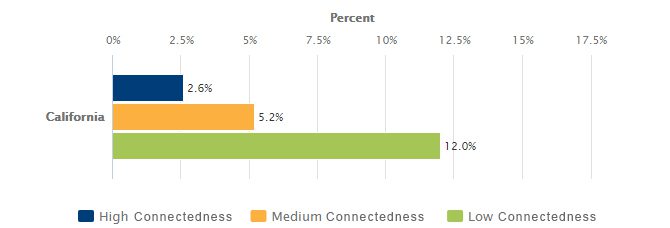
One in five California 7th, 9th, and 11th graders were cyberbullied in the previous year, from 2015-2017. Students with low levels of school connectedness were more likely to be victimized online than their more connected peers. There were 12% of California students with low levels of school connectedness who were cyberbullied four or more times, compared to about 3% of those with high levels of school connectedness in grades 7, 9, 11, and non-traditional programs. Ensuring students feel safe and connected to their schools can diminish the prevalence of cyberbullying.
Cyberbullying is not as easily detectable as in-person bullying and is a growing concern among teachers and families as more children and youth communicate online and via social media. Cyberbullying can often be an extension of in-person bullying at school, worsening the social and emotional stress on children. According to a study from the U.S. Department of Justice, experiencing a mix of online and in-person harassment had the highest negative emotional impact on children compared to in-person only and online-only incidents.
See more data on how the prevalence of cyberbullying varies by gender, race/ethnicity, and sexual orientation.
Additional Resources
California has enacted laws to address cyberbullying, and state and federal policies provide guidance on effective school discipline strategies. These policies encourage schools to teach students social and behavioral skills and to create positive, supportive school environments to promote school connectedness. StopBullying.gov is a federally funded online resource with a wealth of information on cyberbullying and harassment policies, prevention strategies, and helpful tips on how to address cyberbullying incidents.
Recently Released Data
We recently released data about Pupil Support Services and Bullying and Harassment at School. See links to the latest here.
Posted by kidsdata.org
Post Comment
Timely Dental Care Remains a Challenge for Some California Children
Children Ages 2-11 Who Received Dental Care Less Than Six Months Ago: 2015-2016
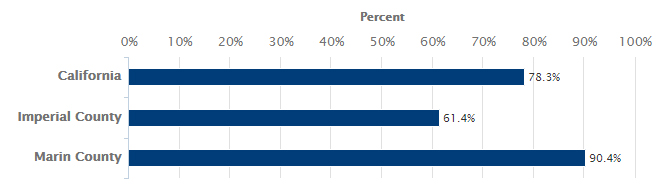
Oral health is essential for healthy development and affects overall health. However, not all California children are receiving dental care at recommended intervals. Overall, 78% of children ages 2-11 received dental care within six months in 2015-2016. Timely dental care varied greatly across California, ranging from 61% in Imperial County to 90% in Marin County.
California ranks among the worst in the nation on measures of children’s oral health and access to dental care, with the highest rates of dental disease and greatest barriers to care consistently experienced by the most vulnerable children. By receiving routine dental care every six months and addressing dental problems early, children avoid potentially damaging effects of poor dental health such as physical pain, speech issues, sleep deprivation, school absences, and problems with self-confidence.
Additional Resources
The California Department of Public Health in collaboration with the Department of Health Care Services, developed the California Oral Health Plan 2018–2028. The plan provides a roadmap for improvements in oral health and identifies five key goals for achieving oral health equity for all Californians.
Recently Released Data
We recently released data about Foster Care. See links to the latest here.
Posted by kidsdata.org
Post Comment