


Archive for August, 2019
Unintentional Injuries Are Leading Cause of Death for Children
Child/Youth Death Rate, by Age and Cause: 2014-2016
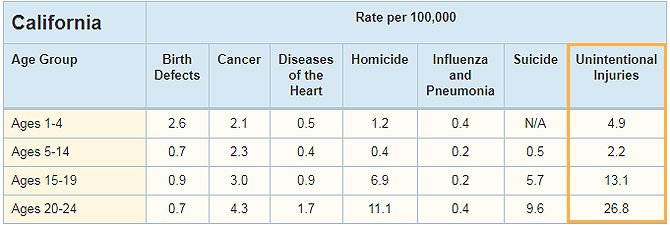
Unintentional injuries were a leading cause of death for ages 1-24 overall in California from 2014-2016. The death of any young person is a tragedy, but deaths from unintentional injuries, or preventable injuries, such as motor vehicle accidents, drowning, and falls are particularly troubling. For children ages 1-4, the most common cause of unintentional injury-related death is drowning; for 5- to 24-year-olds, the most common cause is motor vehicle accidents. Since at least 1996, unintentional injuries have been the leading cause of death for youth ages 15-19.
The data reveal that preventable deaths do not discriminate. Unintentional injuries is the leading cause of death across all racial/ethnic groups, with the exception of African American youth, for whom homicide was the leading cause of death.
Protecting children and youth from unintentional injuries requires both a local and system-level approach, from addressing risk factors, to promoting awareness. Changes in public policies can help reduce risk factors associated with unintentional injuries such as implementing a graduated driver license program to age 21 (Assembly Bill 1267). We must spread awareness on how best to protect our children, especially when their leading cause of death is preventable.
Additional Resources
The California Coalition for Children’s Safety and Health offers safety tips and best practices on drowning prevention, bicycle safety, and more.
According to a recent Kidsdata survey, our most popular topic areas are: physical health; child care and education; and mental, emotional, or behavioral health. Whatever your interest, you can be the first to know about new and recently released data by signing up for customized data alerts. Select the topics, geographies, or demographic groups that interest you, and you will receive an email alert when data are released.
Posted by kidsdata.org
Post Comment
Using Data for Action: Resources and Success Stories
Data have the power to transform the way we see the world, helping us identify health disparities and drive policy change. The Data in Action section of kidsdata.org provides tips and tools for creating data-driven change, as well as success stories of how the Kidsdata community is using data to support children’s health and well-being.
Resources
Learn how to leverage data to create meaningful change. Three helpful tools:
- Crafting a Message for Data-Driven Change: Communicate about children’s health issues with a compelling purpose and message
- Five Criteria for Good Data: Use these criteria to determine the best data to support your work
- Telling Your Best Data Story: Learn how to select the best visualization for your report, presentation, proposal or advocacy efforts
Success Stories
Data can be used to advocate for polices and legislation, assess community needs, strengthen grant proposals, and much more. Read examples of how the Kidsdata community is using data for action, from analyzing bills in the California Legislature to supporting county-wide initiatives and demonstrating the need for children’s health programs in local communities.
How are you using data for action? Share your story.
Recently Released Data
We recently released data about Death and Dental Care. See links to the latest here.
Posted by kidsdata.org
Post Comment
Sexually Transmitted Infection Rates Vary Widely by Race/Ethnicity
Sexually Transmitted Infections by Race/Ethnicity, 2015
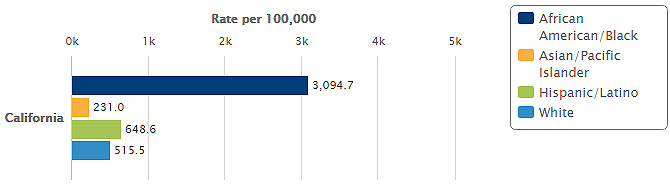
Recent data show disparities in teen sexual health by race/ethnicity in California. Just over 34,000 youth aged 10 to 19 were diagnosed with Chlamydia in 2015. African-American youth were six times more likely to contract Chlamydia compared to White youth and 13 times more likely than Asian/Pacific Islander youth of the same age.
Being informed about sexual health is vital to teen’s overall well-being. Some sexually transmitted infections (STIs) rarely show any symptoms, which if untreated may lead to infertility and other adverse health outcomes. When youth are informed about sexual health, they may be encouraged to practice safer sex or choose abstinence, lowering their risk of contracting STIs. Furthermore, creating conversations about consent has an important role, as does public health policies that encourage using confidentiality laws to protect teens. Efforts to improve teen sexual health in California should also include more opportunities for STI screenings among teens.
Additional Resources
Love Matters is an online space for young adults around the world to openly talk and ask questions about reproductive health, safer sex and relationships.
Recently Released Data
We recently released data about Teen Sexual Health. See links to the latest here.
Posted by kidsdata.org
Post Comment